RESTORATIVE TATTOO
What Is Restorative Tattooing & Who Is It For?
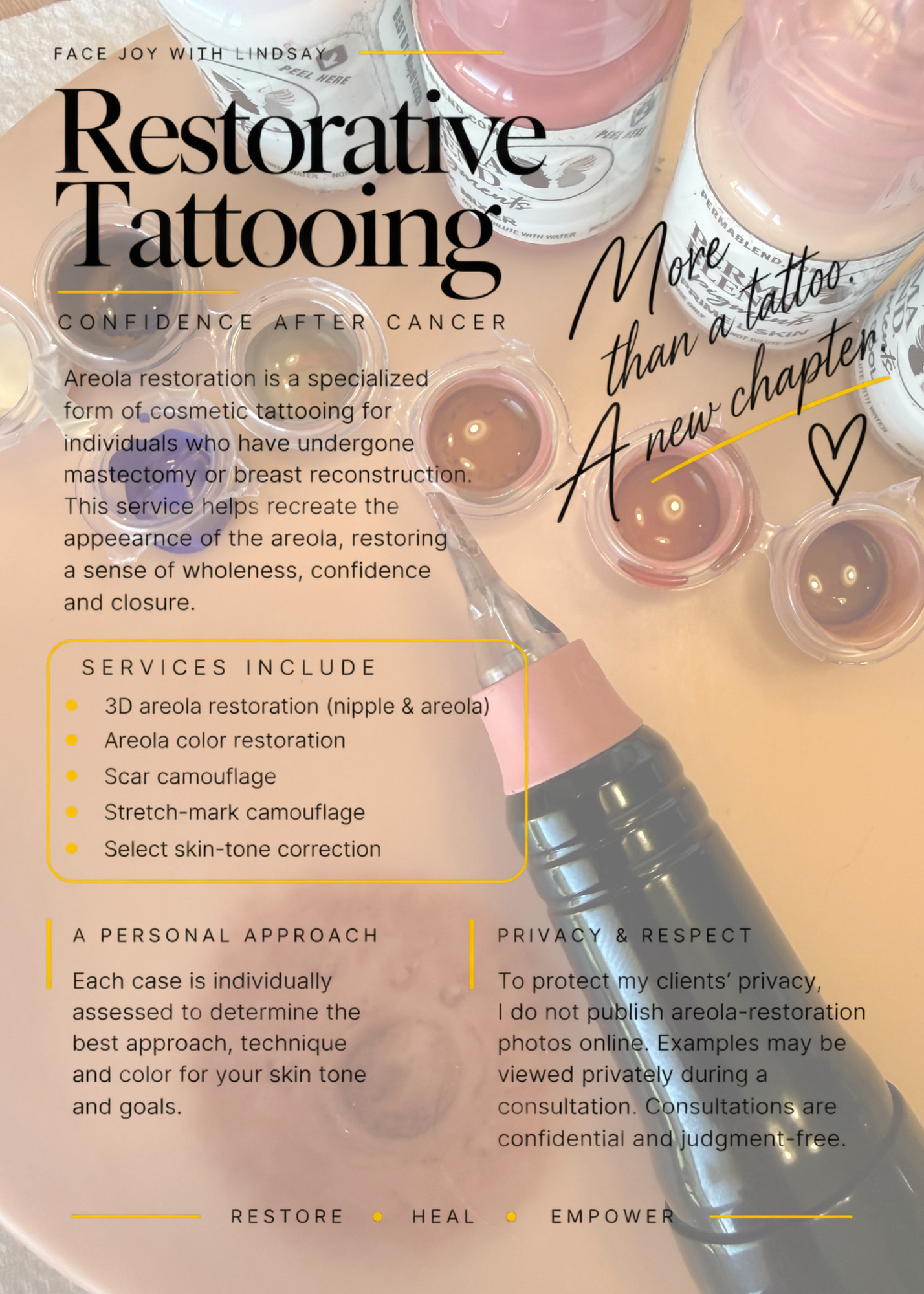
Restorative tattooing is a meaningful way to help restore confidence and feel more at home in your skin. It is for anyone looking to restore the appearance of their skin after surgery, injury, or trauma. This may include individuals who have undergone mastectomies or breast reconstruction, those with scars from surgeries or accidents, or anyone wanting to camouflage areas of discoloration. Through natural-looking areola tattooing and scar camouflage, my goal is to help you feel more confident, comfortable, and beautiful in your own skin.
A Note About My Work
Out of respect for my clients' privacy, I do not publicly share areola tattoo photos online. I understand that this is a very personal and private part of someone's healing journey. If you would like to see examples of my areola tattoo work, please feel free to text me directly. I am happy to share privately.
SCAR CAMOFLAUGE
-
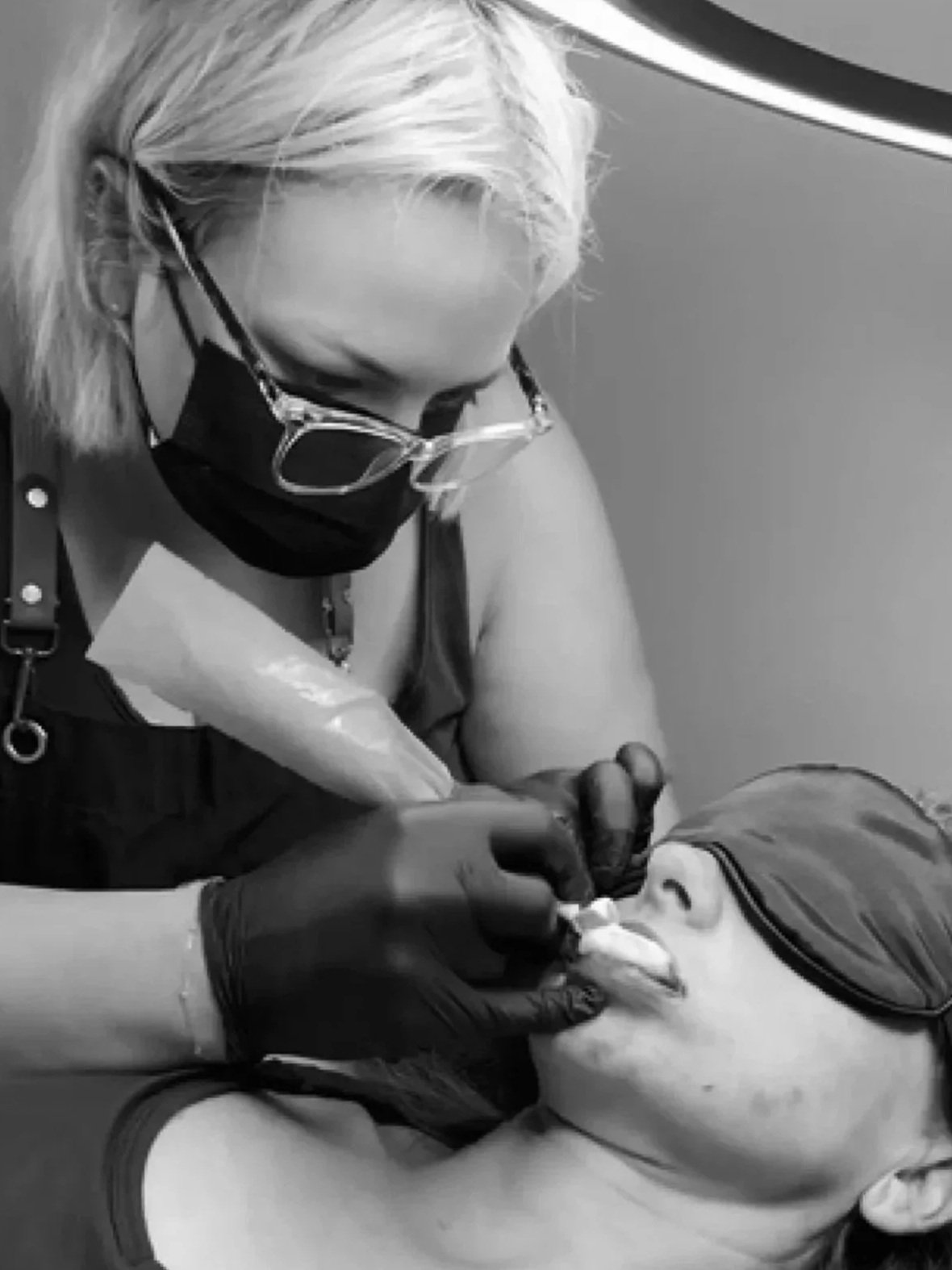
Scar camouflage tattooing (also called paramedical tattooing) uses custom-blended, skin-tone pigments to help scars blend in with the surrounding skin.
-
-
Let’s schedule an in-person consultation so I can take a look at your scar and get a better idea of the size, treatment area, and how many sessions you may need. From there, I can give you a more accurate estimate of pricing and discuss the best approach for your scar camouflage. Treatment size
Suggested price PER SESSION:
Small scar (one or a few small scars)
$250–$400
Medium scar (e.g., breast augmentation or C-section scar)
$400–$650
Large scar (e.g., tummy tuck scar)
$650–$1,000+
Stretch mark camouflage
$500–$1,000+
Touch-up session
$150–$300
-
Please follow these pre-care instructions to help ensure your skin is ready for treatment and achieve the best possible results.
1. NO TAN OR SPRAY TAN — ABSOLUTELY NO EXCEPTIONS
Your skin must be at its natural, untanned color on the day of your appointment.
No sun tanning, tanning beds, self-tanning lotions, tanning mousse, or spray tans before treatment.
Do not come to your appointment with a tan or spray tan. A tan can interfere with accurate pigment matching and affect your results.
Avoid sun exposure that could tan or burn the treatment area for at least 2–4 weeks before your appointment.
If you have recently tanned or applied a self-tanner, contact your artist before your appointment. You may need to reschedule until your natural skin tone has returned.
2. Keep Your Skin Moisturized
Apply a gentle, fragrance-free moisturizer daily.
Avoid dry, cracked, or irritated skin.
Arrive with clean skin and no lotion or oils on the treatment area.
3. Stay Hydrated and Eat Before Your Appointment
Drink plenty of water in the days leading up to treatment.
Eat a balanced meal beforehand.
Get a good night's sleep.
Avoid alcohol for 24–48 hours before your appointment.
4. Review Your Medical History
Inform your artist of all medications, allergies, and medical conditions.
Disclose blood thinners and any history of keloids or abnormal scarring.
Never stop prescribed medication without approval from your prescribing clinician.
Reschedule if you have an active infection, open wounds, or irritated skin.
5. Make Sure Your Scar Is Fully Healed
Your scar must be completely closed, without scabs or open areas.
Most scars should be mature and stable, often at least 6–12 months old or longer.
If your scar is raised, painful, changing, or recently treated, consult your healthcare provider before booking.
Important Reminder
If you have a tan, spray tan, or self-tanner on the treatment area, please notify me before your appointment. We may need to reschedule to ensure accurate pigment matching and the best possible outcome.
Your natural skin tone is essential for selecting the correct camouflage pigment. Thank you for following these instructions and helping us achieve the best results possible!
-
Scar Camouflage Tattoo Aftercare Instructions
Proper aftercare is essential for healing, pigment retention, and achieving the best possible scar camouflage results. Please follow these instructions carefully after your appointment.
1. Keep the treated area clean
Follow the specific cleansing and dressing instructions provided by your artist.
Wash your hands before touching the treated area.
If cleansing is permitted, gently clean with clean water and a mild, fragrance-free cleanser, then pat dry with clean paper towel.
Do not scrub, rub, or pick at the skin.
2. Follow your artist's moisturizing instructions
Use only the recommended aftercare product, in a thin layer if instructed.
Avoid petroleum products, fragranced lotions, acids, retinoids, and unapproved creams on the treated area.
Do not over-moisturize or keep the area excessively wet.
3. Avoid soaking the area
Until the skin has fully healed:
No swimming pools, hot tubs, lakes, or oceans.
Avoid baths and prolonged soaking.
Showers are generally fine; do not direct strong water pressure at the treated area.
4. Avoid sun exposure and tanning
Keep the treated area out of direct sunlight while healing.
Absolutely no tanning beds, sun tanning, spray tans, or self-tanners on the treated area during healing.
Once fully healed, protect the area with broad-spectrum SPF 30 or higher when exposed to sunlight.
5. Avoid friction and irritation
Wear clean, loose-fitting clothing that will not rub against the area.
Avoid excessive sweating, strenuous exercise, and activities that cause friction during the initial healing period.
Do not shave, exfoliate, or use harsh products on the treated skin until healed.
6. Do not pick or peel the skin
Mild redness, tenderness, flaking, and temporary color changes can occur during healing.
Let any flaking or scabbing fall away naturally.
Do not scratch, pick, or peel the treated area, as this may affect pigment retention and healing.
What to Expect During Healing
Days 1–3: Mild redness, tenderness, and swelling may occur.
Days 4–14: Flaking or light scabbing may develop. The pigment may appear uneven or darker before becoming lighter.
Weeks 2–6: The skin continues to settle, and the color may appear lighter or patchy.
Around 6–8 weeks or later: Your artist can assess the healed result and determine whether another session is appropriate.
Healing varies depending on the scar, treatment area, skin type, and individual response. Scar tissue can retain pigment differently from normal skin.
Important: When to Seek Medical Care
Contact a healthcare professional if you develop worsening redness, increasing pain, spreading warmth, pus, fever, red streaks, or other signs of infection. Seek urgent care for severe swelling, difficulty breathing, or a rapidly progressing reaction.
Additional Reminders
Avoid applying makeup or camouflage products until the skin is fully healed.
Do not schedule a touch-up before the skin has healed and the pigment can be properly evaluated.
Follow any individualized instructions provided by your artist or healthcare professional.
Remember: Scar camouflage is a gradual process. The final color and blending can take several weeks to evaluate, and multiple sessions may be needed for the best result.
AREOLA RESTORATION
-
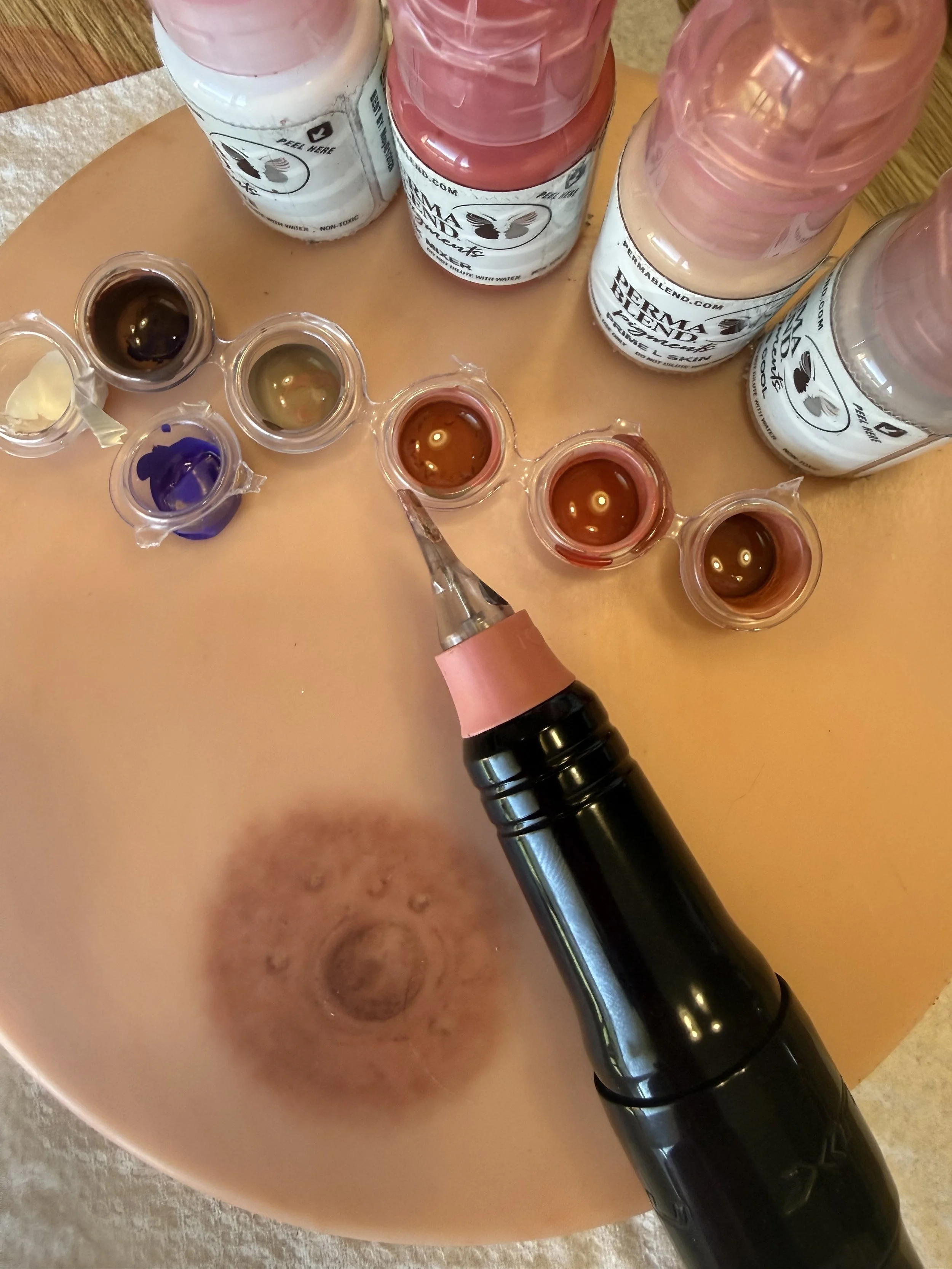
An areola tattoo is a special type of tattoo that recreates the appearance of the areola — the darker-colored skin around the nipple on the breast. It is often used after breast surgery, but it can also be done for cosmetic reasons.
Why do people get areola tattoos?
After breast cancer surgery: To recreate the appearance of the nipple and areola after a mastectomy or breast reconstruction.
After breast reduction or other breast surgery: To restore or improve the appearance of the areola if its color or shape has changed.
For cosmetic reasons: To make the areola look more even in color, improve its shape, or make both sides look more symmetrical.
To restore confidence: Some people choose it to feel more comfortable with their bodies after surgery or other changes.
How does it work?
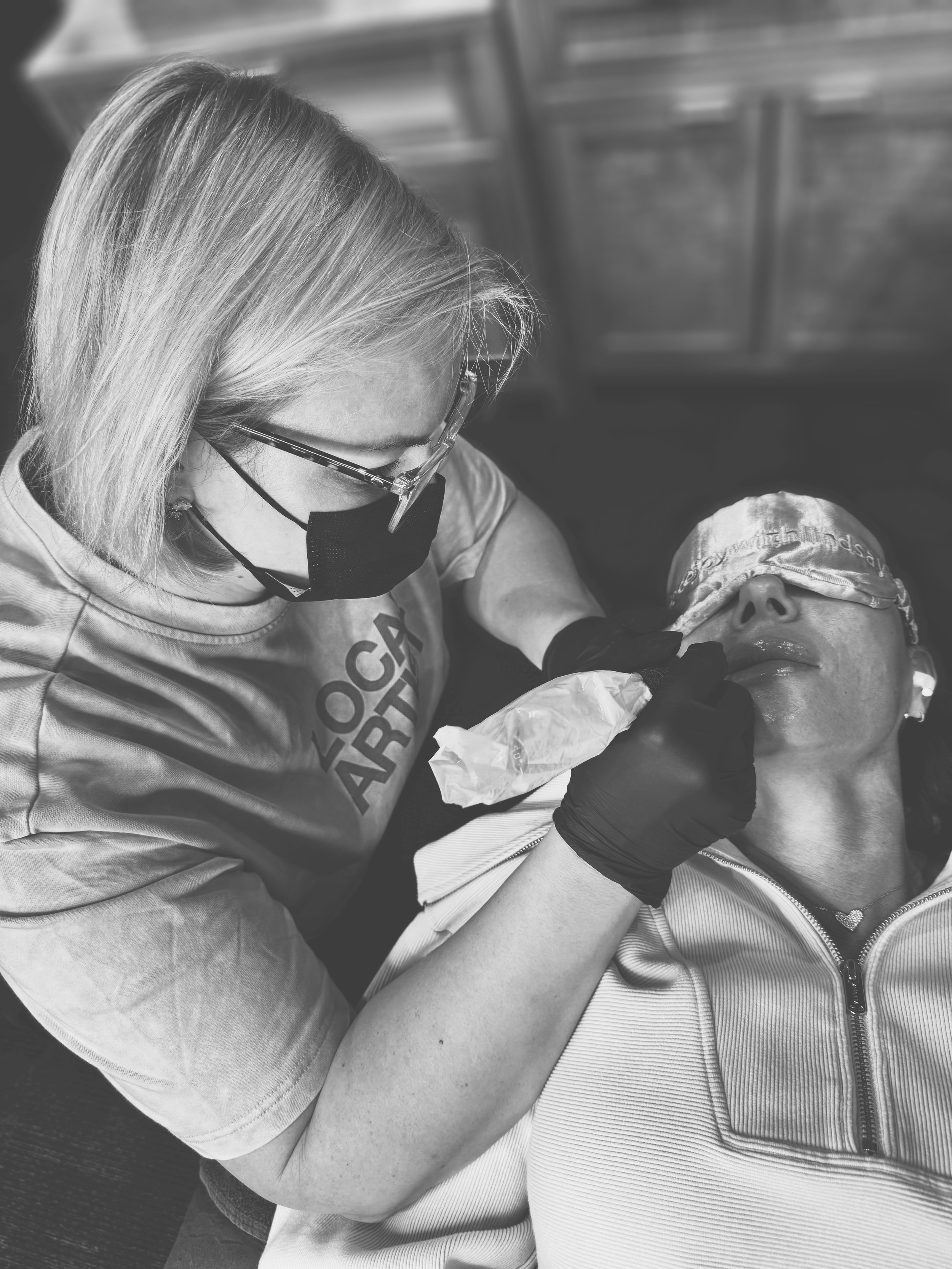
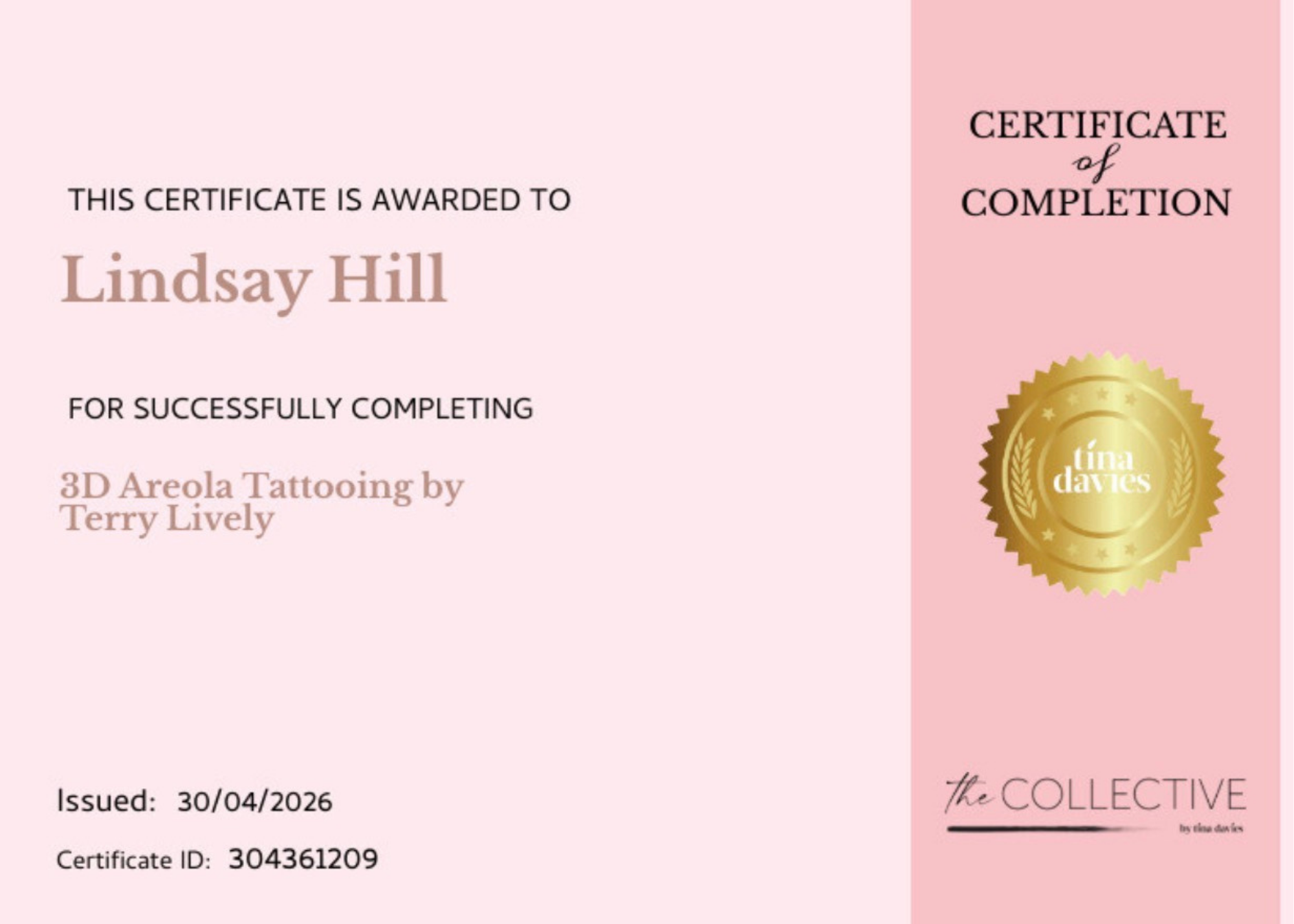
A trained medical tattoo artist or qualified specialist uses tiny needles to deposit pigment into the skin. They carefully blend different shades of color to create a natural-looking areola. A technique called 3D areola tattooing uses shading and highlights to create the illusion of a raised nipple, even when the nipple itself is flat or absent.
How long does it last?
Areola tattoos are generally considered semi-permanent. The pigment can fade over time, and touch-ups may be needed. Healing typically takes a few weeks, although the final color may take longer to settle.
Does it hurt?
It depends on the person's sensitivity and whether they have had breast surgery. Some people feel mild discomfort, while others feel very little, particularly if surgery has reduced sensation in the area. I do use a topical numbing cream to make the process as comfortable as possible.
-
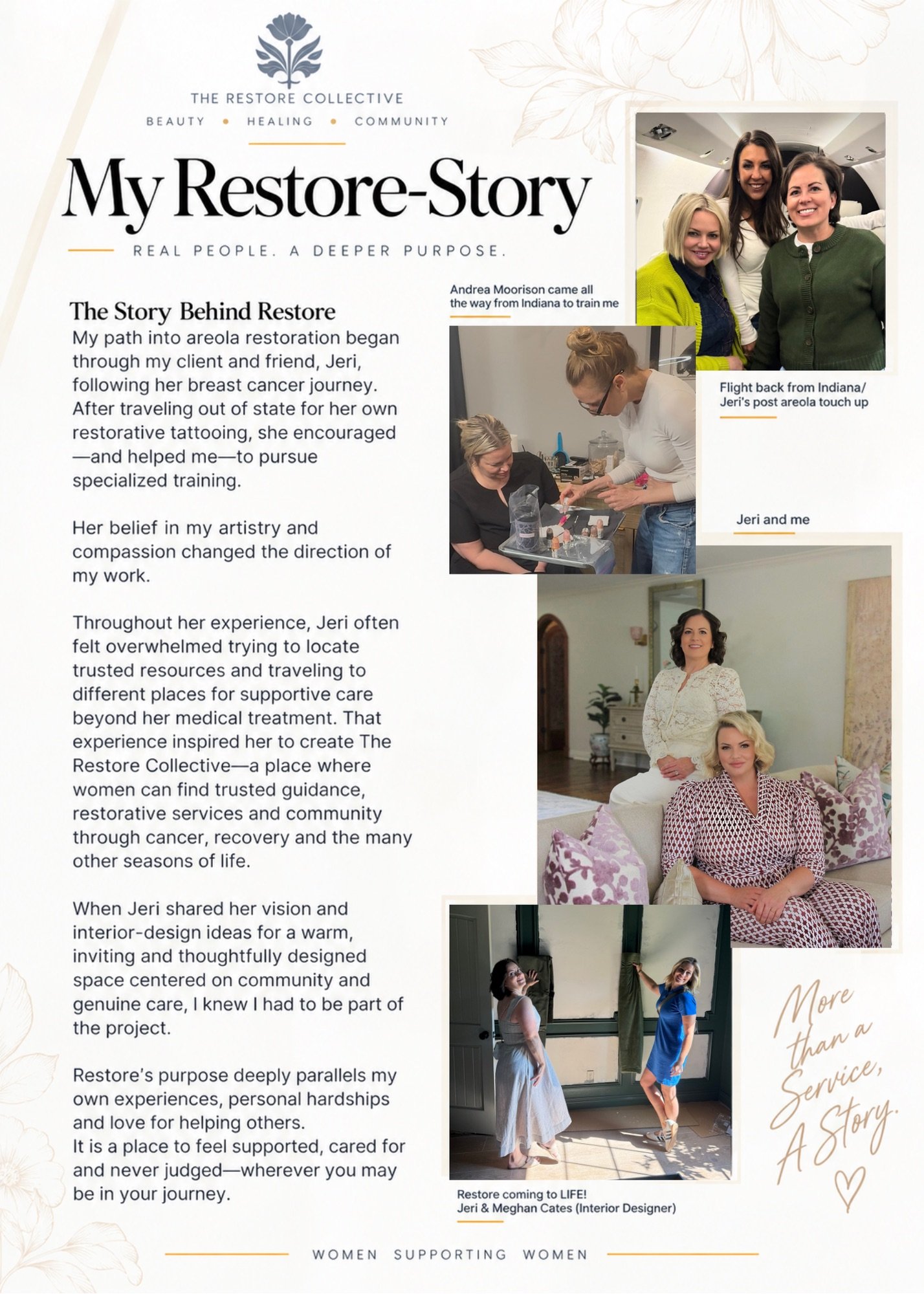
The Restore Collective was thoughtfully designed by Jeri, a breast cancer survivor who understands the unique needs of individuals navigating every stage of the breast cancer journey. Her vision was to create a welcoming, one-stop destination offering essential products, services, and support throughout the healing and restoration process. Support was especially important to Jeri, so when it came time for her areola tattoo appointment, she brought her friends along to share in the experience. If it is something comforting to you, we invite you to do the same!
Our beautiful space is warm, inviting, and intentionally designed to provide comfort, privacy, and peace of mind. We feature a dedicated consultation room that accommodates up to four friends and connects directly to our private tattoo room, as well as a relaxing spa room to encourage self-care and rejuvenation. Feel free to bring your favorite snacks and drinks, share a few laughs, and surround yourself with the love and encouragement of those who mean the most to you. This is more than an appointment—it’s an opportunity to celebrate the closing of one chapter and the beautiful beginning of another. At The Restore Collective, you don’t have to do it alone. We’re honored to be part of your journey.
-
Who Is a Good Candidate for Areola Tattooing?
Areola tattooing, also known as areola micropigmentation or 3D nipple tattooing, may be a good option for individuals who want to restore, enhance, or create the appearance of a natural-looking areola and nipple.
Ideal Candidates
A good candidate for areola tattooing may include someone who:
Has undergone a mastectomy, lumpectomy, or breast reconstruction.
Has had nipple-sparing surgery and wants to enhance the color of the areola.
Has experienced changes in areola color, shape, or size.
Has asymmetrical areolas and desires a more balanced appearance.
Has naturally light or uneven areola pigmentation.
Has undergone gender-affirming chest surgery and desires areola or nipple repigmentation.
Has fully healed surgical scars and wants to camouflage them with micropigmentation, when appropriate.
Is in good overall health and has realistic expectations about the results.
Is comfortable with the procedure and understands that multiple sessions or touch-ups may be needed.
Who Should Not Receive Areola Tattooing at This Time?
Clients should postpone treatment or obtain medical clearance if they:
Are pregnant.
Are breastfeeding or chestfeeding.
Are taking blood thinners or anticoagulant medications, unless their prescribing provider and the tattooing professional determine it is safe. Clients should never stop prescribed medication on their own.
Have an active infection, fever, or illness.
Have open wounds, unhealed incisions, irritated skin, or active skin conditions in the treatment area.
Have recently undergone breast surgery or reconstruction and have not received clearance from their surgeon.
Are undergoing active cancer treatment or have a medical condition that may impair healing, unless cleared by their treating medical team.
Have a history of keloid scarring or abnormal wound healing that may increase their risk of complications.
Have uncontrolled diabetes or a condition that significantly affects circulation, immunity, or wound healing.
Have a known allergy to tattoo pigments or other products that will be used during the procedure.
Before Scheduling an Appointment
Clients should be fully healed from any previous surgery, have no active skin concerns in the treatment area, and disclose all medications, medical conditions, allergies, and relevant surgical history during their consultation.
Important: Eligibility is determined individually. Some conditions require medical clearance rather than automatic exclusion, and local regulations and professional standards may vary.
-
Customized treatment: The color, shape, and technique will depend on your individual skin and desired results.
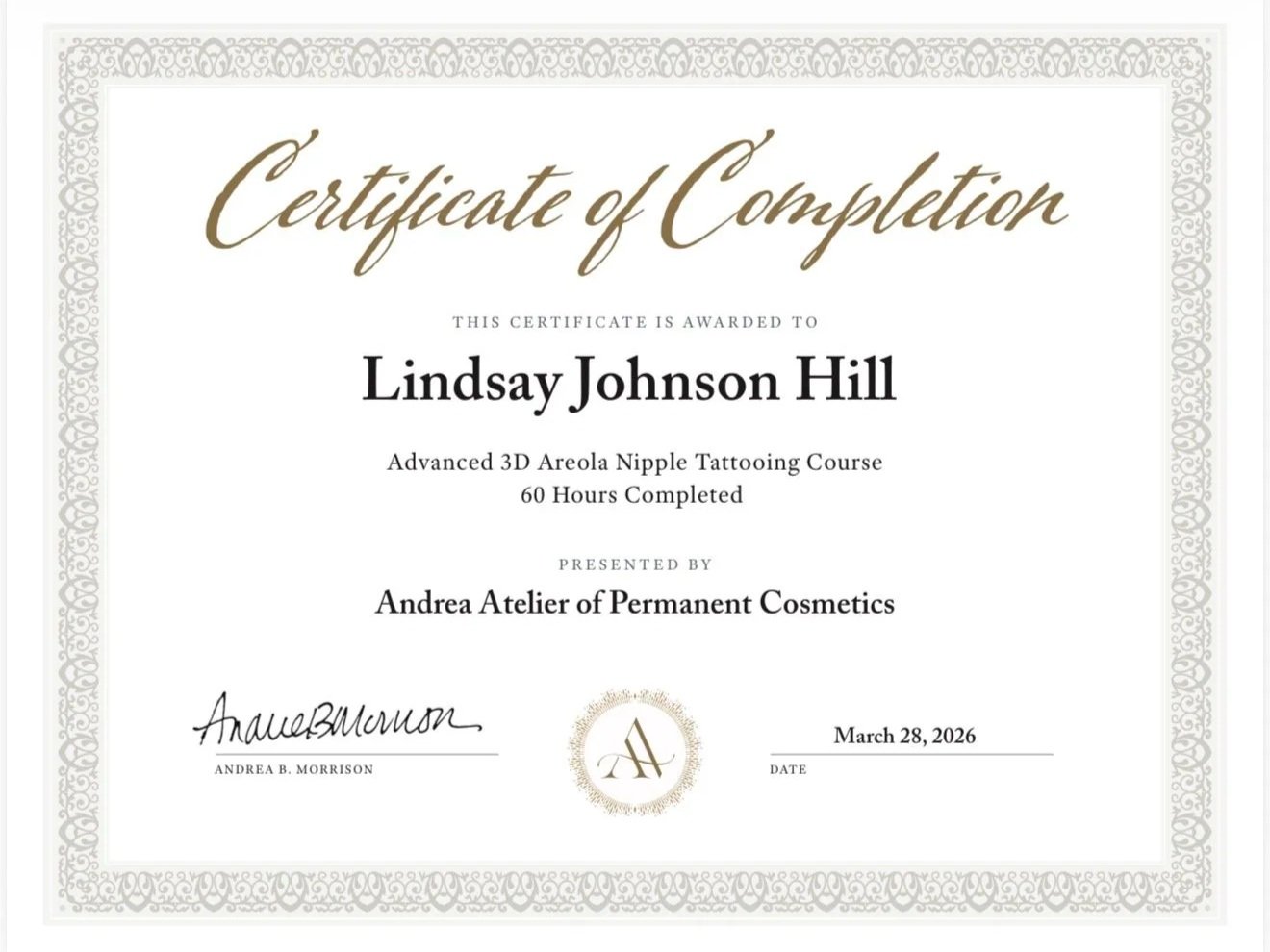
In-person consultation: Lindsay will assess the area to be tattooed and discuss what you want to achieve.
Usually two sessions: Many people need about two appointments to achieve the desired result.
Scar tissue can be challenging: If you have scar tissue, it may not hold pigment as easily, so additional sessions may be necessary.
What should you do next?
Text Lindsay to schedule your consultation. You don't have to commit to the tattoo just by attending the consultation.
405-651-3223
I do not share areola photos on social media- Because it’s part of such a private, personal journey- I’d prefer to show my actual work via text or in person consultation.
Pricing
Pricing varies depending on each individual’s needs and can be discussed in more detail during an in-person consultation.
Advanced 3D restorative tattooing:
$450–$600 for one
$700–$850 for both.
Touch-up session: $100–$200.
After assessing your skin and discussing your goals, I’ll be able to provide a more accurate quote.
-
Areola Restoration Tattoo
Client Preparation Checklist
To ensure the safest experience and the best possible results, please review the following steps before your areola restoration tattoo appointment.
1. Consultation
Schedule an in-person consultation before your procedure.
Discuss your goals, desired color, shape, and overall expectations.
Allow time for a skin assessment, review of any scar tissue, and treatment planning.
Review estimated pricing, the number of sessions needed, and the healing process.
2. Medical Clearance
Obtain written medical clearance or approval from your treating physician or surgeon when required, especially following breast surgery, reconstruction, radiation, or other medical treatments.
Ensure the treatment area is fully healed before scheduling your tattoo procedure.
Inform your artist of any medical conditions, allergies, medications, history of keloid scarring, or healing concerns that may affect your treatment.
If you have had recent surgery or radiation, confirm with your medical team that it is appropriate to proceed.
3. Required Paperwork
Please complete all required forms before your procedure:
Client intake and medical history form.
Informed consent form.
Tattoo procedure acknowledgment and aftercare agreement.
Photo release form, if applicable and only if you choose to consent.
Physician clearance documentation, if required.
4. Preparing Your Skin
Keep the treatment area clean, moisturized, and free from irritation.
Avoid tattooing over sunburned, broken, infected, or inflamed skin.
Avoid applying lotions, oils, creams, or other products to the treatment area on the day of your appointment unless instructed otherwise.
Do not discontinue prescribed medications without consulting your healthcare provider.
5. On the Day of Your Appointment
Eat a meal before arriving and stay well hydrated.
Wear comfortable clothing that allows easy access to the treatment area.
Arrive on time and bring any outstanding paperwork or medical clearance.
Be prepared to review your goals, confirm your consent, and ask any final questions.
6. Planning for Healing
Allow adequate time for healing and follow all personalized aftercare instructions.
Avoid swimming, soaking, and activities that may irritate the treated area until sufficiently healed.
Understand that scar tissue may retain pigment differently and that more than one session may be needed.
Schedule your follow-up or perfecting session as recommended by your artist.
Please note: Your safety comes first. If the treatment area is not fully healed or a medical concern needs further evaluation, your appointment may need to be postponed. Individual preparation instructions may vary based on your medical history and treatment needs.
I look forward to helping you feel comfortable, informed, and confident throughout your areola restoration journey.
-
Aftercare Instructions
Proper aftercare is essential for healing, pigment retention, and achieving the best possible results. Please follow these instructions carefully.
1. Tegaderm Dressing
You will leave your appointment with a Tegaderm transparent protective dressing over your tattoo.
Leave the dressing in place for 3 days (72 hours), unless it leaks, becomes compromised, or you experience a reaction.
Keep the dressing clean and avoid pulling, lifting, or picking at the edges.
A small amount of fluid, blood, or pigment may collect beneath the dressing. This can be normal.
If the dressing leaks, becomes loose, or causes significant itching, redness, blistering, or irritation, remove it according to the product instructions and contact your tattoo artist or healthcare professional for guidance.
Wash your hands thoroughly before touching the treated area.
2. Keep the Area Dry and Avoid Submerging
While the dressing is in place:
Avoid submerging the treated area in water.
Do not swim in pools, lakes, oceans, or hot tubs.
Avoid baths, saunas, and steam rooms.
Follow your artist's instructions about showering and protecting the dressing. Do not allow water to get underneath it.
3. Removing the Dressing After 3 Days
Wash your hands before removing the dressing.
Gently remove it in a warm shower or according to the manufacturer's instructions. Peel slowly rather than pulling upward forcefully.
Gently wash the tattoo with clean hands, lukewarm water, and a mild, fragrance-free cleanser.
Rinse thoroughly and pat dry with a clean paper towel. Do not rub or scrub.
If the dressing sticks firmly, do not force it off.
4. Daily Care After Dressing Removal
Gently cleanse the tattoo once or twice daily, as directed by your artist.
Apply only a very thin layer of the recommended fragrance-free aftercare product, if advised.
Keep the area clean and avoid excessive moisture.
Do not reapply Tegaderm or another occlusive dressing unless specifically instructed.
Do not pick, scratch, rub, or peel flaking skin or scabs. Allow them to shed naturally.
5. Activities to Avoid During Healing
Until the tattoo is fully healed:
Avoid swimming, hot tubs, baths, and other activities that submerge the area.
Avoid strenuous exercise or activities that cause excessive sweating or friction against the tattoo.
Avoid tight clothing, bras, or fabrics that rub against the treated area.
Avoid direct sun exposure, tanning beds, and applying sunscreen directly to healing skin.
Avoid exfoliants, alcohol, hydrogen peroxide, fragranced products, and unapproved creams on the tattoo.
Healing commonly takes a few weeks. Wait until the skin is completely healed before resuming activities that may irritate the area.
6. What to Expect During Healing
The tattoo may initially appear darker or more intense than expected. Mild tenderness, redness, swelling, and light flaking may occur.
As the skin heals, the pigment may appear lighter or uneven temporarily. The final color takes time to settle, and a follow-up session may be needed to refine the color or address areas where pigment did not retain evenly.
Do not judge your final results during the early healing stage.
7. When to Seek Medical Attention
Contact a healthcare professional promptly if you experience:
Increasing redness, warmth, swelling, or pain.
Pus, a foul odor, or worsening drainage.
Fever, chills, or red streaks extending from the treated area.
Blistering, a widespread rash, or significant itching beneath the dressing.
Seek urgent care for rapidly worsening symptoms or signs of a serious allergic reaction.
8. Important Reminders
Follow your personalized aftercare instructions.
Do not discontinue prescribed medications or apply medicated products without medical guidance.
Allow the tattoo to heal completely before scheduling a perfecting session.
Contact your artist if you have questions or concerns during healing.
Your results depend on proper healing and individual skin characteristics. Scar tissue may retain pigment differently, and additional sessions may be necessary.
Thank you for trusting me with your areola restoration journey!